When your hearing feels obstructed, it can impact your daily schedule and leave you feeling detached from your environment. While the anxiety of permanent hearing damage is a common first response, the true culprit is frequently a simple collection of canal debris.
Recognizing how to tell these two conditions apart ensures you obtain the correct treatment, whether that is safe cerumen extraction or a clinical hearing test. Avoid the urge to worry if your hearing feels suddenly reduced. While only an audiologist can confirm the cause, reviewing these essential indicators of earwax vs. auditory decline can provide immediate insight.
What Earwax Buildup Feels Like
Your ears generate wax as a natural defense process to maintain integrity and keep debris away from the eardrum. Clinical issues only manifest when the wax neglects to migrate out of the ear, leading to a significant accumulation or impaction.
Signs of a clog often feature:
- Progressive or abrupt muffled hearing
- The perception that there is a physical plug in the ear
- Ear discomfort or mild pain
- Constant buzzing or hissing sounds
- Instances of sharper hearing following a yawn or chewing
Because obstructions are physical, they frequently affect just a single ear at a point rather than each equally. Fortunately, once excess wax is safely removed, hearing often returns to baseline instantly.
What Hearing Loss Feels Like
Hearing loss, especially presbycusis or noise-induced hearing loss, has a tendency to progress slowly and doesn’t resolve when the ear is cleared.
Signs of actual auditory impairment may feature:
- Issues with word clarity in busy or noisy settings
- Constantly asking people to restate themselves
- Increasing the TV or smartphone volume higher than people desire
- Trouble hearing treble tones like nature or soft voices
- A balanced reduction in auditory function in both ears
A vital distinction is that true loss lacks the tangible “plugged” feeling that follows a cerumen blockage.
Key Differences at a Glance
By analyzing the onset and particular markers, you can frequently determine which condition is impacting you:
- Onset: Earwax issues often come on suddenly; auditory impairment progresses slowly
- Duration: Cerumen issues are treatable and temporary, whereas impairment is typically chronic
- Markers: Pressure points to a blockage; struggling with word precision points to decline
- Symmetry: Blockages are frequently asymmetrical, but permanent loss is commonly bilateral
Why You Shouldn’t Treat Yourself
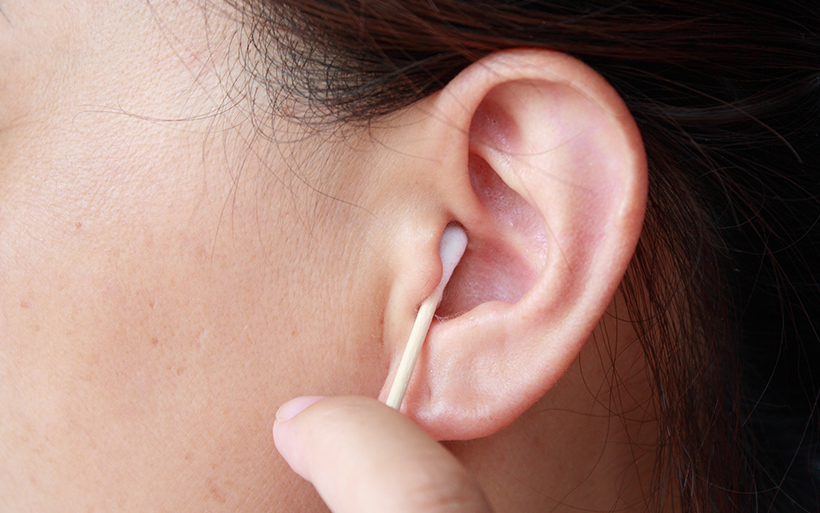
When hearing feels dampened, the instinctive desire is to use a Q-tip, but this is often a hazardous move. Using external objects commonly shoves the plug further into the canal, heightening the danger of trauma.
Health experts warn that putting anything smaller than your finger in your ear can result in eardrum damage and major clogging.
Similarly, neglecting initial hearing loss can delay treatment that assists in preserving interaction, safety, and quality of life.
What to Expect Throughout a Professional Consultation
A clinician can employ an otoscope to immediately visualize if a physical obstruction is visible.
If an obstruction is identified, a clinician can clear it safely, often returning your hearing immediately.
When the canal is clear but sound remains muted, a clinical test is necessary to audit your auditory health.
The National Institute on Deafness and Other Communication Disorders (NIDCD) advises prompt assessment anytime changes in auditory function conflict with your everyday routine.
Is It Earwax Blockage or Auditory Decline?
Muffled hearing doesn’t always indicate irreversible trauma.
It is often the reality that a basic, treatable obstruction is the root of the concern.
Obtaining professional attention guarantees you locate the specific source and the right remedy for your hearing needs.
Keep in mind: The only reliable way to tell the distinction between earwax buildup and hearing loss is with a clinical evaluation.
Getting clarity promptly can prevent pointless worry and guarantee you receive the right care at the right time.
Instead of wondering what is amiss, book a quick check-up with our audiologists to uncover the reality.